🎖️Who is a Prefect?
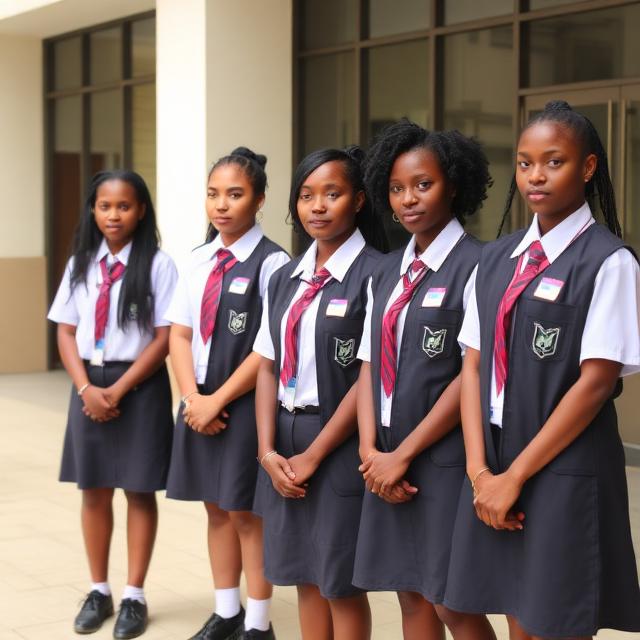
A prefect is a learner appointed to a position of
trusted authority within the school. Prefects are not little teachers or mini–police officers;
they are young leaders who have been given limited power and a great responsibility to guide
their peers, support staff and protect the learning environment.
Prefects are students who
offer leadership, maintain order and guide other students. They practice integrity,
model maturity and act as a visible bridge between the learner body and the adults of the school.
Good prefects are followed because they are trusted and respected, not because they shout
the loudest or punish the hardest.
Effective prefectship is therefore about:
- Leading by example in behaviour, punctuality, respect and work ethic.
- Treating everyone fairly, regardless of friendship groups, ability or background.
- Taking responsibility when things go wrong and helping to find solutions.
- Backing up fellow prefects and the RCL, rather than competing for attention.
- Creating a safe, welcoming atmosphere in passages, classrooms and school events.
When a school mentors its prefects properly, it is not just filling duty rosters. It is
investing in the next generation of community leaders, professionals and parents who will one day
guide society itself.
⚖️Mandate, Legislation and Policies Behind the RCL
The mandate of the RCL is rooted in national education law and school-level policies.
The key ideas are:
-
South African Schools Act (SASA): SASA frames public schools as
democratic communities where learners, parents and educators all have
a role. It requires public secondary schools to establish an RCL and includes
learner representatives on the School Governing Body. -
Provincial Education Regulations and Circulars: Provinces issue
guidelines on how RCLs should be elected, their size, training programmes and
how they work with SMTs and SGBs. -
School Constitution and RCL Constitution: Every school should have
a written RCL constitution, usually attached to the school’s own constitution
or code of conduct. This document sets out the
rights, responsibilities, term of office, election rules and procedures. -
School Policies: Policies on discipline, safety, bullying, uniforms,
cell phones and events will often specify roles for prefects and the RCL, giving their work
authority and clarity.
Taken together, these laws and policies ensure that the RCL is not a symbolic club but a
legally recognised partner in governance. Learner leaders are expected to uphold
the Constitution of South Africa, respect human rights and promote a safe, inclusive learning atmosphere.
🗳️How the RCL and Prefects Should Be Elected and Constituted
A democratic, fair election process is the heart of a legitimate RCL and prefect system.
When learners can see the “sunset” of an old leadership and the “sunrise” of a new one in
a transparent way, they are more likely to respect the leaders chosen.
Step 1: Review the RCL Constitution
Before each election cycle, the SMT or RCL coordinator should present the
RCL and Prefect Constitution to the learners.
It must clearly state:
- Eligibility criteria (grade level, conduct record, attendance, academic standard).
- Nomination procedures and closing dates.
- Campaign rules and limitations.
- Voting method and how results will be verified.
- Term of office, removal procedures and filling of vacancies.
Step 2: Nominations
Learners nominate candidates who meet the criteria. This can be done through:
- Class meetings where candidates are proposed and seconded.
- Nomination forms submitted to the RCL coordinator.
- Screening by SMT to ensure discipline and academic requirements are met.
Step 3: Campaigning
Campaigning gives learners a taste of real democracy but must be carefully controlled:
- Limited posters in designated areas, using respectful and positive language.
- Short speeches at assemblies or class visits where candidates share their vision.
- No buying of votes, bullying or promises that violate school rules.
Step 4: Voting
Voting should be by secret ballot where possible, to encourage honest choices.
Ballot papers are counted by a neutral team (teachers plus impartial learners) and
results are signed off by the principal and RCL coordinator.
Step 5: Selecting Head Boy, Head Girl and Deputies
There are two common models:
-
Direct election: Learners vote specifically for Head Boy and Head Girl
from a shortlist of senior candidates. -
Indirect election: After the general RCL or prefect elections, the SMT and
RCL executive select the Head Boy, Head Girl and deputies from among the top-performing leaders,
using clear criteria.
Criteria may include:
- Leadership track record and references from teachers.
- Ability to speak confidently and respectfully in public.
- Emotional maturity, humility and willingness to serve.
- Balanced academic performance and discipline record.
Step 6: Induction, Training and Mentorship
The election is only the beginning. New leaders
must receive training in:
- Leadership styles – autocratic, democratic, bureaucratic – and when each may be useful.
- Emotional intelligence – understanding others’ feelings and motivations.
- Integrity and character – doing the right thing when no one is watching.
- Communication and conflict management – listening, mediating, giving feedback.
Continuous mentorship sessions, reflection circles and feedback from teachers help leaders
grow throughout their term of office.
🌟The Role of the Head Boy, Head Girl and Their Deputies
The Head Boy and Head Girl are more than figureheads. They carry
a symbolic role, standing at the “water’s edge” between learners and adults. Their deputies support
and step in when needed, ensuring continuity of leadership.
Key responsibilities typically include:
- Leading assemblies and representing learners during formal occasions.
- Chairing or co-chairing meetings of the RCL and prefect body.
- Meeting regularly with the principal or SMT to raise learner concerns respectfully.
- Mentoring younger leaders and helping with succession planning.
- Modelling the school values in uniform, punctuality, language and relationships.
Because they stand in the spotlight, head learners must be carefully supported so that the
pressure does not overwhelm them. Confidential guidance from a teacher-mentor and regular
check-ins about workload, stress and relationships are essential.
❓FAQs About Prefects and the RCL
1. What is the difference between the RCL and the prefect body?
tap to open
The RCL is the official democratic structure through which learners
participate in school governance and decision-making. It deals with policies, learner welfare,
school culture and communication with the SGB and SMT.
The prefect body focuses more on discipline and daily operations such
as lines, assemblies, functions and supervision. In many schools the same learners may serve
in both, but the mandates are different.
2. Is an RCL compulsory in every South African school?
tap to open
The South African Schools Act requires all public secondary schools to have a
Representative Council of Learners. Many primary schools also choose to implement an RCL or
junior council in order to teach democratic participation from an early age, even where it is
not legally required.
3. Who decides the rules for electing RCL members and prefects?
tap to open
Election rules are usually set out in the RCL Constitution, which is approved
by the School Governing Body and aligned with provincial guidelines. The SMT and RCL coordinator
manage the process, but learners are encouraged to understand and own the rules so that the
elections are transparent and credible.
4. Can a learner with past disciplinary problems become a prefect or RCL member?
tap to open
Each school sets eligibility criteria. Many schools require a clean discipline
record for a set period (for example, the previous year) and reserve the right to disqualify
learners with serious offences. However, some schools also make space for genuine change by
considering evidence of improved behaviour and taking decisions case-by-case.
5. How long does an RCL or prefect serve?
tap to open
Most RCLs and prefect bodies serve for one academic year, usually from the
time of induction (often in the first term) until the next group is elected. Some schools
choose overlapping terms so that new leaders can be mentored by more experienced ones.
6. Can an RCL member also be a prefect?
tap to open
Yes. In many schools, senior learner leaders hold dual roles, serving both on
the RCL and the prefect body. What matters is that the roles are clearly explained so that
duties do not clash and the learner is not overloaded or used as unpaid security.
7. How are the Head Boy and Head Girl chosen fairly?
tap to open
Fair selection depends on transparent criteria. Schools may use direct learner
voting, selection by the RCL executive plus SMT, or a combination of both. In all cases,
academic effort, conduct, leadership track record, communication skills and attitude to service
should be considered and communicated in advance.
8. What happens if an RCL member or prefect breaks the rules?
tap to open
The RCL Constitution should include disciplinary and removal procedures.
Usually there is a progressive process: warning, mentoring and written agreement. For serious
or repeated offences, a hearing may recommend suspension or removal from office, while still
respecting the learner’s rights and dignity.
9. How can teachers support the RCL without controlling it?
tap to open
Teachers act as mentors and guides, not puppeteers. They help learners read
policies, plan meetings, manage budgets and resolve conflicts, while allowing the RCL to make
its own decisions within agreed limits. Regular reflection sessions and leadership workshops
are powerful tools.
10. Why is learner leadership so important for the future?
tap to open
Schools are mini versions of society. When learners practise democracy, accountability,
empathy and service in the RCL and prefect body, they are rehearsing the roles they will play
as adults – voters, parents, workers, entrepreneurs and community leaders. Strong learner
leadership today is therefore an investment in a stronger, more ethical society tomorrow.
RCL
Prefects
Head Boy
Head Girl
School Governance
Youth Leadership
Democracy in Schools
Mentorship
Discipline
Learner Voice