
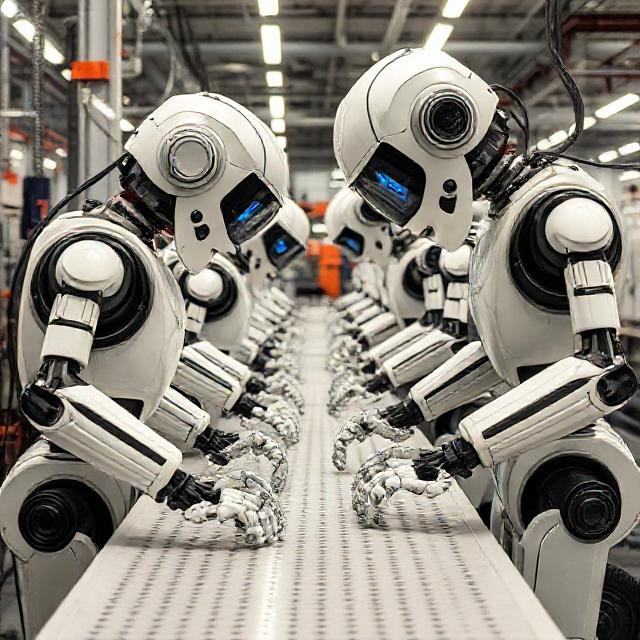
The Rise of Robot Workers in South Africa
The Rise of Robot Workers in South Africa
THE ROBOTS ARE NOT COMING — THEY’RE ALREADY HERE From Johannesburg warehouses to Cape Town restaurants, and Durban logistics hubs to mining operations in Rustenburg, robot workers are quietly transforming the South African economy. By 2030: 40–60% of industrial jobs will be partially automated warehouse robots will reduce labour demand mining robots will handle dangerous operations restaurant service bots will deliver food farming robots will harvest crops security robots will patrol buildings This article examines how robot workers are reshaping industries — and what it means for workers, families, and the country. WHY SOUTH AFRICA IS ADOPTING ROBOTS FASTER THAN EXPECTED 1 High Labour Costs & Low Productivity Businesses adopt automation to reduce costs. 2 Safety Risks Mining and construction deaths push companies toward robotics. 3 24/7 Work Cycles Robots don’t strike, sleep, or demand overtime. 4 Global Competition To compete globally, automation is necessary. INDUSTRIES BEING REVOLUTIONIZED 1 Mining Industry Robotic drilling Automated trucks AI-controlled excavation 2 Retail and Logistics Warehouse robots Inventory bots Delivery drones 3 Farming and Agriculture Harvesting robots Drone crop spraying Automated irrigation 4 Hospitality Robot waiters Self-service kiosks 5 Security Patrolling robots License plate scanners Thermal AI systems IMPACT ON JOBS — THE HARD TRUTH Jobs at High Risk packers tellers cashiers cleaners warehouse staff machine operators drivers security guards Jobs That Will Grow robot maintenance programming hardware repair cybersecurity data analysis engineering South Africa must prepare for massive labour restructuring. THE SOCIOECONOMIC RISKS unemployment spikes youth joblessness widening inequality lack of digital skills weakened labour unions If not addressed early, automation will destabilize communities. — PREPARE THE WORKER, PROTECT THE FAMILY A conservative stance argues: ✔ 1. Workers must adapt, retrain, and upgrade skills. Personal responsibility is essential. ✔ 2. Families must be economically protected through stable career planning. ✔ 3. The government must regulate automation to prevent mass displacement. ✔ 4. Society must emphasize skill-based education, not ideology. ✔ 5. Robots must serve productivity — but human dignity must remain central. Robots may work — but humans must remain the backbone of family, community, and society.
Quick FAQs
This FAQ summarizes the uploaded article titled “The Rise of Robot Workers in South Africa.”
It reflects ongoing changes in technology, society, and daily life.
Use information responsibly and stay informed.