
The Corruption Crisis Beyond the Headlines — How Corruption in Post Appointments, Nutrition, and Norms & Standards Dire
Clean, luminous, and calming — ideal for clarity and long‑form reading.
The Corruption Crisis: Beyond the Headlines — How Corruption in Post Appointments, Nutrition, and Norms & Standards Directly Impacts a Child’s Learning I. Corruption in Education Is Not a Political Issue — It Is a Childhood Issue Across South Africa, corruption in the education sector is often treated as a political scandal: exposed by media, debated in Parliament, and forgotten until the next exposé. But hidden beneath the outrage is a much darker truth: corruption directly harms children — academically, physically, emotionally, and developmentally. When a principal’s post is sold
to the highest bidder, learning suffers. When nutrition budgets are stolen, learners go hungry. When norms and standards funds vanish, children learn in collapsing classrooms. When procurement tenders are rigged, textbooks arrive late — or not at all. This is not an abstract governance failure. It is a daily assault on childhood, especially for the most vulnerable: rural, township, and impoverished learners. This documentary-style investigation examines the three major corruption pillars — post appointments, nutrition, and norms & standards — and traces exactly how corruption travels from tenders and offices
into the lives of children sitting in classrooms.
II. Post Appointments: When Jobs Are Sold, Learning Is Stolen Perhaps the most disturbing corruption scandal in the history of South African education was the jobs-for-cash (capture of basic education) investigation conducted by the Ministerial Task Team in 2015–2016 under Professor John Volmink. The findings were devastating: Principal posts and senior positions were sold for cash Union officials interfered with hiring District officials manipulated interview panels Competent candidates were blocked Political loyalty trumped merit The report described a “parallel system of governance,” especially in KwaZulu-Natal, Mpumalanga, Limpopo, and parts of
Eastern Cape — where appointments were controlled through corruption networks. How does this hurt children? 1. Incompetent principals destroy schools Schools with corruptly appointed principals show: lower pass rates poor discipline mismanaged finances teacher absenteeism weak curriculum management collapsing maintenance Principals shape school culture. When leadership collapses, everything collapses. 2. Good teachers are pushed out When positions are sold or politically captured, excellent teachers: are sidelined lose motivation resign from dysfunctional schools transfer to better-run provinces Children lose the expertise they desperately need. 3. Honest educators become discouraged Members of
SGBs have repeatedly testified in public hearings: “We can’t fight corruption when the corrupt are promoted above us.” This creates a schooling environment where effort is not rewarded — corruption is. 4. Corruption fuels violence Some criminal networks threaten interview panel members or manipulate hiring through intimidation. Teachers fear for their safety, and schools become unsafe environments.
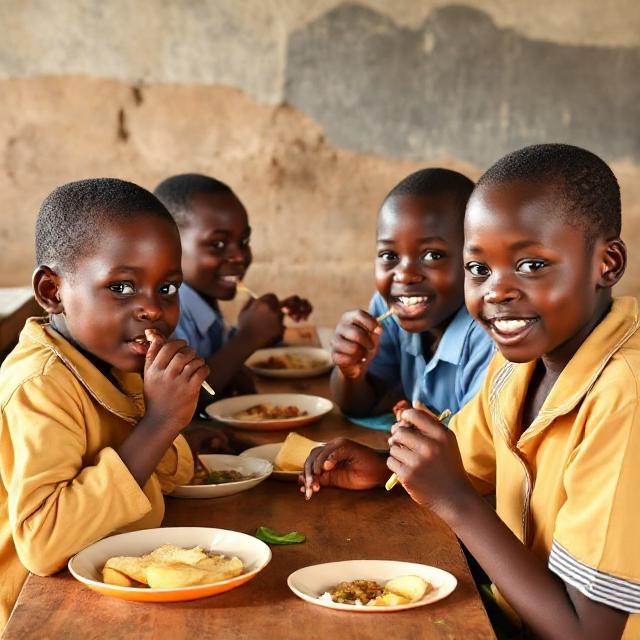
III. Nutrition Programme Corruption: When Budgets Are Stolen, Children Learn Hungry The National School Nutrition Programme (NSNP) feeds more than 9 million learners daily. But this programme has become a hotbed of corruption: tenders awarded to politically connected suppliers food that is expired or rotten fraudulent invoices “ghost deliveries” inflated prices subcontracting chains draining budgets suppliers delivering water + maize meal only to pocket profits The 2023 KwaZulu-Natal nutrition collapse exposed how catastrophic the problem is. One company received a R2.1-billion contract for all 12 districts — a logistical impossibility.
Within days: schools received no food millions of children went hungry teachers had to send learners home curriculum time was lost fainting incidents increased The province nearly triggered a humanitarian crisis. Hunger and learning Children cannot learn when their basic needs are unmet. Scientific research shows: Hunger reduces concentration Malnutrition harms brain development Hungry children perform worse academically Behavioural problems increase Dropout rates rise Nutrition corruption is not an administrative failure — it is child abuse in slow motion.
IV. Norms & Standards: The Corruption of Infrastructure Funds In 2013, the Minister signed the Minimum Norms and Standards for School Infrastructure into law. It mandated: Safe buildings Adequate classrooms Electricity Water Sanitation Security In theory, every school would be safe by 2016. In reality, thousands are still unsafe in 2025. Why? Billions meant for infrastructure have been stolen or misused. Auditor-General reports and SIU investigations highlight patterns: contractors paid before work was done substandard building materials used inflated contract prices construction abandoned mid-way political interference in tender allocation repeated
hiring of “blacklisted” contractors missing invoices untracked expenditure The consequences for learners are brutal Collapsing classrooms Roof collapses and falling debris have killed children. Pit latrines At least eight documented deaths, including Michael Komape (2014) and Lumka Mkhethwa (2018). No electricity No lights. No technology. No photocopying. No digital learning. No clean water Learners share buckets, walk long distances, or fall sick from contaminated sources. Unsafe premises Broken fences allow criminals and gangs onto school grounds. The state has repeatedly missed its own infrastructure deadlines because billions leak out through
corruption networks.
V. The Combined Impact: How Each Corruption Stream Damages Learning
When corruption infects posts, nutrition, and infrastructure simultaneously, the outcome is catastrophic.
Learners get…
hungry stomachs
incompetent principals
absent teachers
broken buildings
missing textbooks
unsafe toilets
disrupted teaching time
teaching from photocopies
demoralised educators
dangerous, violent school environments
The compound effect is devastating and measurable. Schools plagued by corruption perform 35–40% lower on literacy and numeracy benchmarks, according to NEEDU and PIRLS-aligned local studies.
VI. Real Stories from Schools: What Corruption Looks Like on the Ground Case Study 1 — Limpopo A principal bought his post for R30 000. Within one year: school fees disappeared nutrition funds misused SGB meetings not held teachers left the school’s pass rate dropped from 72% to 39% Case Study 2 — Eastern Cape A contractor built three classrooms with walls cracking within months. Learners had to shift desks away from corners because plaster kept falling. Case Study 3 — KZN Suppliers delivered maize porridge so watery and spoiled
that children vomited. Teachers reportedly used their own salaries to buy fruit and bread. Case Study 4 — Mpumalanga An SGB chairperson appointed his cousin as a teacher despite failing interviews. The school functioned without a qualified maths teacher for two years. These are not isolated incidents — they form a national pattern.
VII. Why Corruption Persists: Systemic Blind Spots
Political protection
Officials implicated in wrongdoing are transferred, not dismissed.
Weak oversight
Districts seldom audit schools properly.
Untrained SGBs
Many members cannot interpret financial statements.
Fear culture
Teachers do not report wrongdoing due to retaliation.
Union interference
Some union structures block accountability to protect members.
Slow disciplinary processes
Cases take years, if addressed at all.
A culture of impunity
Wrongdoing has no consequences.
VIII. The Conservative Lens: Why Corruption Flourishes
Traditional conservative political philosophy emphasises:
moral discipline
limited government
clear consequences
decentralisation
strong institutions
independent law enforcement
accountability through transparency
South Africa’s education system is the direct opposite:
over-centralised
politicised
union-dominated
bureaucratically heavy
consequences rare
performance incentives absent
moral culture weakened
Under these conditions, corruption does not just survive — it thrives.
IX. What a Conservative Rebuild Would Look Like 1. Depoliticise appointments Independent panels, external experts, and merit-based processes. 2. Audit transparency All school financial reports published publicly. 3. Zero tolerance Automatic disciplinary action for financial misconduct. 4. Independent infrastructure agency Remove politicians and districts from construction tenders. 5. Strengthen SGB oversight Mandatory training in procurement, auditing, and compliance. 6. Protect whistleblowers Teachers must not fear reporting wrongdoing. 7. Community-driven checks Local oversight committees with real teeth. 8. Direct-to-school funding Minimise leakage at middle management level. This is not ideology —
it is functional governance.
X. Conclusion: A Conservative Stand Corruption in education is not victimless. Its victims are not the officials who get caught. The victims are children, particularly the poorest children, who already face overwhelming odds. When corruption steals their textbooks, their safety, their food, and their teachers, it steals their future. Traditional Conservative Position: Restoring integrity in the education system requires a return to moral accountability. Without meritocratic hiring, strict auditing, transparent spending, and real consequences, corruption will continue to destroy children’s opportunities. Education cannot thrive in a system where dishonesty is
rewarded and competence is sidelined. To reclaim the future of South African learners, corruption must be confronted with uncompromising firmness. The lives, futures, and dignity of millions of children depend on it.
Conclusion
Clarity leads to understanding — and understanding leads to real change.