
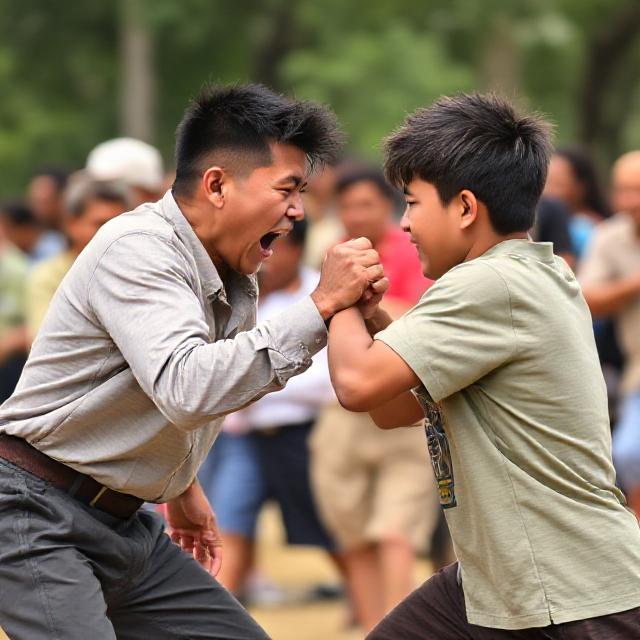
orporal Punishment 2.0 Moving Past the Stick — Effective, Positive Discipline Strategies That Work in Challenging South
Corporal Punishment 2.0: Moving Past the Stick — Effective, Positive Discipline Strategies That Work in Challenging South African Classrooms For many South African teachers, especially those working in overcrowded and under-resourced schools, the ban on corporal punishment felt like the removal of the only tool left to maintain order. For decades, the education system was built around a stick. When the stick was removed, nothing was put in its place — no training, no resources, no assistants, no enforceable discipline policies, and no real support from the Department. What filled
that vacuum? Chaos. Defiance. Disrespect. Aggression. Classroom disorder. And the widespread belief that teachers are powerless. But discipline does have modern alternatives that work — not the soft, unrealistic, kumbaya-style “positive discipline” pushed by consultants who have never taught in township or rural schools. This article explores Corporal Punishment 2.0 — a practical, tough, structured, non-physical discipline system designed for real South African classrooms. This is discipline that restores authority without violence. This is discipline that protects teachers without breaking the law. This is discipline that works even when the
system does not. And at the end, we take an uncompromising stance defending teachers who have been stripped of authority by a government that refuses to enforce basic order.
- The Death of Corporal Punishment — and the Birth of Chaos Corporal punishment was banned in 1996 — a morally correct decision, but implemented with zero structural support. What teachers were told: “Find alternatives.” “Use positive reinforcement.” “Build relationships.” “Use counselling.” “Stay calm.” What teachers actually got: Overcrowded classrooms Broken school codes of conduct SMTs too scared to discipline No classroom assistants No psychologists Violent learners with no consequences Parents attacking teachers for disciplining children Districts that blame teachers for everything Teachers were expected to maintain discipline with idealistic
theories that fall apart in the face of 70 learners, 5 disruptive children, and a school with 0 support staff. Corporal punishment ended — but no functional alternative replaced it.
- The Myth of “Soft” Positive Discipline Many training workshops teach unrealistic techniques such as: “Give the learner a choice.” “Use a calm corner.” “Avoid punishment.” “Talk through feelings.” “Do not raise your voice.” “Treat every outburst as trauma.” These methods work in: small classes middle-class schools safe communities well-resourced settings They do not work in schools where: learners carry anger from violent homes class sizes reach 60+ teachers have no backup parents undermine discipline gangs influence behaviour corporal punishment was the norm for decades South Africa needs strong, structured
alternatives — not soft ones.
3. Corporal Punishment 2.0 — Discipline Without the Stick
This is a modern, lawful discipline system designed for realistic South African conditions.
It is firm.
It is uncompromising.
It restores teacher authority without physical punishment.
It is based on:
clarity
consistency
consequence
control
routine
respect
Let’s break it down.
Strategy 1: The “Firm Frame” Method — Authority Through Structure
This method establishes teacher authority through:
1. A strict start-of-class routine
Learners enter with:
silence
workbooks out
bags on the floor
no loitering
The first 5 minutes determine the next 45.
2. Clear, non-negotiable rules
Examples:
No talking when the teacher is talking
No insults or swearing
No walking around without permission
No phones
No eating in class
Raise your hand to speak
Rules must be:
simple
visible
repeated
consistent
3. Commands instead of requests
Weak teachers ask:
“Can everyone please sit down?”
Strong teachers say:
“Sit down. Books out. Page 32.”
Your tone is your authority.
Strategy 2: The “Immediate Consequence Ladder” Instead of physical punishment, teachers use a 4-step consequence ladder. Step 1: Warning (short, direct) “Stop talking.” “Move seats.” “Focus.” No lectures. No emotion. Step 2: Loss of privilege Examples: last to leave class no partner for group work extra written reflection task move to front row Step 3: Written behaviour report Learner completes a structured reflection form: What I did Why I did it Why it was wrong How I will change Signatures This documents a pattern for escalation. Step 4: SMT referral
Only used when Step 1–3 fail. This prevents: overusing SMT relying on punishment inconsistent discipline
Strategy 3: The 30-Second Calm Correction
Teachers often escalate conflict by lecturing.
The 30-second rule prevents explosions.
Process:
Walk toward the learner
Speak quietly
Give a short command
Walk away
Continue teaching
This removes attention from the misbehaving learner and prevents power struggles.
Strategy 4: Seating Plans That Control Behaviour
A powerful, underrated tool.
Seats should be assigned — not chosen.
Group:
talkers separately
troublemakers near the front
attention-seekers away from their “audience”
Seating plans are a discipline tool, not a convenience.
Strategy 5: The “Teacher Presence” Technique
Presence is psychological power.
Increase presence by:
standing tall
staying calm
making eye contact
moving around the class slowly
pausing mid-sentence
lowering your voice when the class gets loud
A teacher who looks in control is in control.
Strategy 6: Controlled Power — One Rule, One Consequence
Consistency beats toughness.
If you say:
“No phones in class.”
Then confiscate every phone you see.
No exceptions.
No favors.
No fear.
If rule enforcement is inconsistent, discipline collapses.
Strategy 7: Detention That Works in Poor Schools
Many schools claim detention “doesn’t work.”
That’s because they use soft detention.
Real detention involves:
writing tasks
cleanup duty
reflection sheets
test corrections
behaviour journaling
Learners must work, not relax.
Strategy 8: The “Silent Start” Technique
Every lesson begins with:
a written starter activity
5 minutes of silence
no teacher explanation
This:
resets behaviour
stops chatter
helps late learners settle
buys time for attendance
establishes authority
Strategy 9: Parental Boundaries and Zero-Friendly Policies
Parents must be handled strategically.
Rules:
No WhatsApp fights
No emotional responses
No meeting without SMT
No walking into classrooms
No bending rules for entitled parents
The teacher must appear professional at all times.
Strategy 10: The “Strong but Kind” Persona
Learners respect teachers who are:
confident
fair
predictable
firm
calm
structured
They lose respect for:
emotional teachers
inconsistent teachers
teachers who shout
teachers who joke too much
teachers who beg
Strength earns respect.
Kindness earns trust.
Balance earns authority.
4. Why These Strategies Work Better Than Corporal Punishment
Corporal punishment only suppresses behaviour temporarily.
It does not build:
self-control
routine
accountability
responsibility
Corporal Punishment 2.0 builds long-term discipline without fear or pain.
It makes classrooms safer, calmer, and more predictable.
5. The System Still Fails Teachers — Even With Alternatives
Let’s be honest:
These strategies work.
But teachers cannot succeed alone.
The system must provide:
real consequences for violent learners
SMTs that enforce rules
security guards
social workers
psychological support
functioning discipline policies
Teachers cannot maintain discipline in a collapsing system.
- Final Conclusion — The Aggressive, Pro–Working-Class Conservative Stand Let’s speak plainly: Teachers did not create the discipline crisis. Weak policies did. Political cowardice did. Parent entitlement did. Broken homes did. A government scared of enforcing consequences did. And despite this chaos, teachers are expected to perform miracles using: “positive discipline posters” “restorative circles” “mindfulness sessions” “relationship building” This is unrealistic. This is insulting. This is dangerous. A working-class conservative stance demands: 1. Restore teacher authority immediately — non-negotiable. 2. Enforce real consequences for violent or disruptive learners. 3. Hold
parents accountable for bullying and undermining educators. 4. Implement national discipline legislation with zero loopholes. 5. Install security and psychological services in every high-risk school. 6. Protect teachers before protecting learner “feelings.” Discipline is not optional. Order is not optional. Respect is not optional. Safety is not optional. Teachers cannot teach when chaos rules. If South Africa wants real education progress, it must rebuild discipline based not on violence — but on authority, structure, and consequences. Corporal Punishment 2.0 is the only realistic path forward.
Conclusion
Stay clear, stay curious, and let your learning sparkle.