
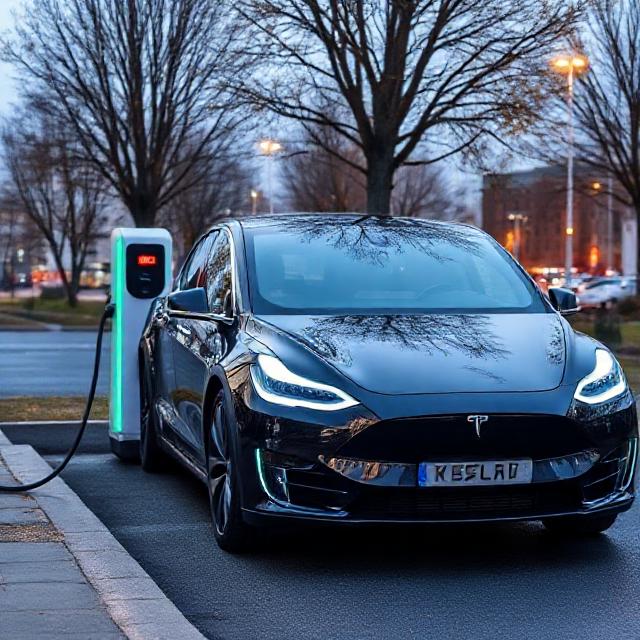
Electric Cars in SA- Are We Really Ready-
Carbon‑fiber aesthetics, pit‑lane practicality, and South African road reality — all in one guide.
Electric Cars in SA: Are We Really Ready? (1500+ words, documentary-style with conservative stance)
Electric vehicles (EVs) are marketed as the future — clean, modern, advanced, and progressive. Europe is banning petrol cars by 2035. American and Chinese manufacturers are racing toward total electrification. Global climate policies are pushing “zero-emission” transport aggressively. But there is a problem: South Africa is not Europe. South Africa is not China. South Africa faces: severe loadshedding unstable grid expensive electricity huge distances between cities a weak charging infrastructure high cost of EV imports low consumer trust This article investigates whether SA can realistically adopt EVs — and whether the push is practical or ideological. SA’S ELECTRICITY CRISIS MAKES EV ADOPTION NEARLY IMPOSSIBLE You cannot run an electric car when: the grid collapses transformers burn substations blow loadshedding reaches Stage 6+ Charging a car becomes a luxury. One EV uses the same electricity as an entire household. Multiply that by millions and the grid collapses. EV advocates ignore this reality.
As of 2025, SA has: around 400 public chargers nationwide most located in wealthy suburbs almost none in rural towns limited fast-charging options Meanwhile, petrol stations number over 4,600. You can fill a petrol car anywhere. An EV? Only in select urban zones. EVs ARE TOO EXPENSIVE FOR THE AVERAGE SOUTH AFRICAN The cheapest EVs cost: R500,000 to R750,000 (entry-level) R900,000 to R1.2M for mid-range R1.5M+ for premium Yet the average SA income is around R6,000–R8,000 per month. Most citizens cannot afford EVs — nor the cost of replacing a battery that often costs R200,000–R350,000.
South Africa has huge travel distances: Johannesburg → Cape Town = 1400 km Durban → Bloemfontein = 600 km Polokwane → Pretoria = 260 km EV range drops by 40% when: using aircon carrying passengers climbing hills driving fast A 400 km range often becomes 250 km in real conditions.
EVs are not “zero emissions.” They simply move emissions from exhaust pipes to power stations. In SA, 80–85% of electricity comes from coal. Meaning EVs run on coal power. You’re basically driving a coal-powered car.
Conservatism argues: ✔ 1. Technology must match local reality — not global ideology. EVs work in countries with stable grids. SA is not one of them. ✔ 2. Hybrid and petrol vehicles remain the backbone of SA mobility. ✔ 3. We must strengthen the grid BEFORE forcing electrification. ✔ 4. Policies must protect working-class citizens from elite-driven agendas. Electric cars are the future — but not for South Africa, not now, and not under current conditions.
Electric Isn’t Just a Car Choice — It’s an Infrastructure Choice
Buying an EV is like joining a new racing class. The car is only half the equation; charging networks, grid stability, and repair ecosystems matter just as much.
Where SA Is Catching Up
- More public chargers in metros.
- Solar‑home charging setups rising fast.
- Fleets experimenting with EV vans and utes.
The Hard Truth
Load shedding and long intercity distances remain obstacles. The realistic conservative stance is “move forward, but build local resilience first”: solar + storage at homes, clear standards for chargers, and incentives for local skills training.
FAQs
What’s the most practical takeaway for everyday drivers?
Adopt a motorsport habit: inspect, measure, and maintain regularly. It prevents breakdowns and saves money.
Does this advice apply to older cars too?
Yes. Older cars benefit even more because small issues grow faster when parts age.
How do I start if I’m a beginner?
Pick one skill at a time: tyre pressure checks, basic detailing, or reading your owner’s manual. Consistency beats perfection.
Conclusion
Motorsport is the extreme laboratory of car life. What survives the track survives the road. Use the lessons above not as trivia, but as a playbook for safer, smarter, and more confident driving in South Africa’s real conditions.