
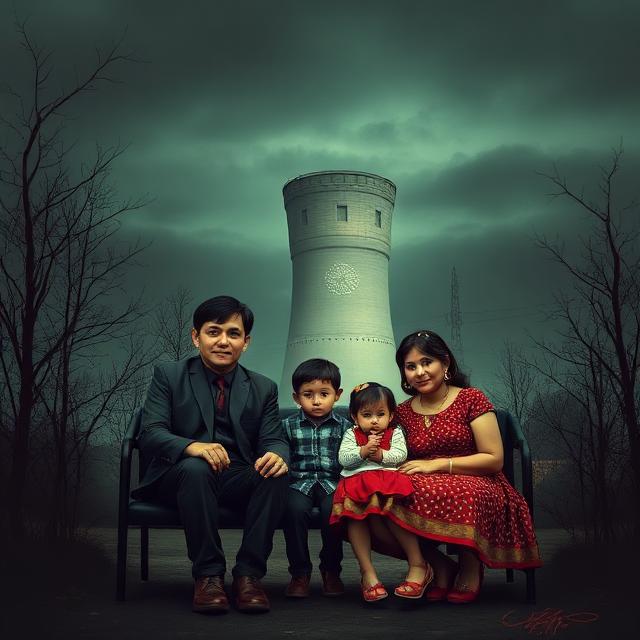
The Concept of a Nuclear Family Is Under Attack
A deep reflection on how modern pressures, ideologies and cultural shifts are weakening the traditional family unit – and why it matters for children, communities and society.
Introduction
For decades, the nuclear family – traditionally defined as a household made up of a father,
mother and their children – has been considered the foundation of stable societies across the world. In South
Africa, Africa as a whole, and globally, the nuclear family has historically played a crucial role in raising
children, instilling values, promoting stability, and ensuring intergenerational support.
However, in recent decades, many people – from sociologists and religious leaders to teachers, community
structures and ordinary parents – have raised concerns that the nuclear family is under increasing
threat. These threats come from economic pressures, social changes, cultural shifts, technological
influences and even deliberate ideological movements that undermine the importance of a stable home with
parental presence and shared responsibility.
This article explores how the nuclear family is being eroded, what forces are responsible, the consequences of
this erosion, and what can be done to restore family stability in the modern world.
1. Economic Pressures Are Reshaping Families
One of the biggest threats to the traditional nuclear family is economic instability. In many
countries, including South Africa, unemployment, rising living costs and urban migration have changed how
families live.
High unemployment among men and women undermines the traditional breadwinner models. Parents often work long
hours or juggle multiple jobs, leaving children without consistent parental guidance. Urbanisation separates
extended families and reduces community support that used to share child-rearing responsibilities.
Financial stress increases conflict and makes relationships more fragile. Couples argue more about money, basic
needs and survival. Over time, this can lead to separation, divorce or emotional withdrawal inside the home.
The result is a growing number of fragmented families, children who grow up with one parent,
and homes strained by economic pressure rather than united by shared values and vision.
2. The Rise of Single-Parent Households
Single-parent households are increasing worldwide – not only due to divorce but also due to unplanned
pregnancies, abandonment, early parenthood, migration for work and unstable relationships. While many single
parents work incredibly hard to raise stable and successful children, the rapid increase in single-parent homes
reflects a deeper breakdown of long-term commitment and family structure.
Research from many countries shows that, on average, children in stable two-parent homes tend
to have better emotional, academic and social outcomes. This does not mean single parents are failing; it means
that society is shifting away from structures that once protected children and provided layers of support.
When the nuclear family weakens, grandparents, relatives and communities often attempt to fill the gap, but they
are also under pressure. Over time, children may grow up with a sense that families are temporary and fragile
rather than stable and dependable.
3. Cultural Shifts and Changing Social Norms
Another major factor is the rapid evolution of cultural beliefs about relationships, marriage, gender roles and
parenting. In many societies, marriage is no longer automatically viewed as a lifelong commitment but as a
temporary arrangement that can be ended when feelings change.
Cohabitation without long-term plans is increasingly common. Society also normalises casual relationships with
no clear parenting structure, while media and entertainment often celebrate individual freedom over family
responsibility. Traditional values that emphasised patience, endurance and mutual sacrifice in marriage are
frequently labelled “old-fashioned”, “patriarchal” or “restrictive”.
The modern culture promotes personal happiness and self-fulfilment above all else. While
self-care is important, an extreme focus on self, with little regard for children or the long-term impact of
decisions, can weaken the commitment needed to sustain a nuclear family through difficult seasons.
4. The Influence of Technology and Social Media
Technology is a double-edged sword. While it brings convenience and connectivity, it also introduces new threats
that quietly weaken families. Many parents and children spend more time on screens than talking to one another.
Family meals, game nights and meaningful conversations are often replaced by phones, television and social
media scrolling.
Parents may be physically present but emotionally absent, distracted by emails, streaming or social apps.
Children, meanwhile, are influenced by online celebrities, influencers and peers, sometimes more than by their
own parents. The internet exposes them to sexual content, harmful ideologies, cyberbullying and unrealistic
lifestyles that shape their expectations of relationships, gender, success and identity.
Technology also makes it easier for adults to engage in online affairs, secret chats and pornography,
all of which can damage trust, intimacy and loyalty in marriage. In this sense, digital life competes with the
home for influence – and often wins if boundaries are not clearly set.
5. The Decline of Moral and Spiritual Foundations
Traditionally, strong moral and spiritual values helped hold families together. Many cultures and faiths
emphasised respect, fidelity, commitment, sexual discipline, community belonging, honour and integrity. These
values encouraged people to stay, to work through problems and to place children’s welfare above personal
impulses.
In many modern societies, however, there has been a shift towards moral relativism, where
everyone is told to “live your truth” and “do what feels right to you”. While personal freedom is important,
the absence of a shared moral standard can make it difficult to hold families together when crisis comes.
Without a common framework about right and wrong, people may view promises and vows as flexible. Infidelity,
neglect and selfish behaviour can be excused, and children are often the ones who pay the price emotionally,
psychologically and spiritually.
6. Ideologies That Undermine the Family
While movements for gender equality and human rights have brought many positive changes, certain extreme
ideologies have unintentionally weakened the nuclear family by promoting hostility and mistrust between men and
women. When the narrative becomes “men are the problem” or “women don’t need anyone”, cooperation in building a
stable family is undermined.
In some circles, the nuclear family is portrayed as inherently oppressive, patriarchal or outdated. Marriage is
treated as a prison rather than a partnership. Fatherhood is mocked or dismissed. Motherhood is sometimes
undervalued or portrayed only as a burden, rather than as a vital role in human development.
These messages filter into schools, media, social networks and policy debates, shaping how young people view
relationships. Over time, commitment, sacrifice and long-term partnership lose their appeal, and short-term
pleasure or independence is prioritised instead.
7. The Breakdown of Fatherhood
One of the clearest signs that the nuclear family is under attack is the collapse of fatherhood
in many communities. Large numbers of children grow up without present, engaged fathers. Some men avoid
commitment due to unemployment, fear of responsibility, immaturity or negative cultural expectations. Others
are present physically but emotionally distant.
Fatherlessness is linked to higher crime rates, school dropout, teen pregnancy, substance abuse and emotional
instability. Boys may struggle with identity, discipline and respect for authority. Girls may wrestle with
self-worth and boundaries in relationships. Society often underestimates how deeply children need responsible
fathers as protectors, providers, teachers and role models.
When fatherhood is mocked, ignored or abandoned, the nuclear family becomes fragile and children carry wounds
that can last a lifetime.
8. The Overload on Mothers and Family Stability
At the same time, mothers are under unprecedented pressure. Many are expected to be full-time workers, full-time
parents, emotional counsellors, household managers and sometimes the only breadwinners. Without strong support
from fathers, extended family and community, mothers often experience burnout, stress and feelings of failure.
A nuclear family is designed to share roles and responsibilities. When one parent is overloaded, tension rises.
Children may feel neglected even when the parent is doing their best. The emotional atmosphere in the home can
become heavy and unpredictable, further weakening family stability.
9. The Collapse of Community and Extended Family Support
In previous generations, children were often raised by a collective of parents, grandparents, aunts, uncles,
neighbours and community elders. Today, these support structures have eroded due to urban migration, long
working hours, rising crime, broken trust and increasingly individualistic lifestyles.
As a result, the nuclear family is more isolated than ever before. It is expected to function alone in a world
that constantly undermines stability and commitment. When a crisis hits – illness, job loss, death or conflict –
there may be few people around to help, advise or carry the load.
The weakening of community means that when nuclear families fail, there is no safety net for children and
vulnerable adults.
10. The Psychological Impact on Children
When the nuclear family collapses, children are often the silent sufferers. They may experience abandonment
wounds, identity issues, attachment disorders, low self-esteem and difficulty forming stable relationships
later in life. Some act out through risky behaviour; others shut down emotionally.
Children thrive in an environment of structure, stability and consistency – values provided most reliably by a
healthy nuclear family where both parents are committed, present and emotionally available. While no family is
perfect, the presence of two loving, responsible adults in the home provides a strong foundation for a child’s
development.
11. The Social and Economic Costs of Weak Families
Societies with weakened family structures face a range of problems: higher crime, poor education outcomes,
increased reliance on government support, greater mental health burdens, economic decline and more substance
abuse. When many families are unstable, the effects are visible in schools, workplaces, health systems and
communities.
Strong families act as a buffer, absorbing shocks that would otherwise crush individuals. They teach discipline,
responsibility, empathy and cooperation – all qualities needed for a healthy society. When families crumble,
the state, charities and institutions struggle to fill the gap, often with limited success.
12. Restoring and Defending the Nuclear Family
The concept of a nuclear family is under attack from many sides, but it is not beyond repair. Restoring family
stability requires intentional effort at multiple levels.
1. Strengthening marriages:
- Promote honest communication and conflict resolution skills.
- Encourage premarital and marital counselling.
- Teach that love is more than feelings – it is a daily decision.
2. Empowering fathers:
- Highlight the importance of active fatherhood in media and education.
- Create mentorship spaces where older men guide younger men.
- Support job creation and economic participation for men.
3. Supporting mothers:
- Promote realistic expectations and shared responsibilities at home.
- Encourage family and community support for working and stay-at-home mothers.
- Provide access to mental health and parenting resources.
4. Reviving moral and spiritual foundations:
- Encourage faith communities and cultural leaders to model strong families.
- Teach values such as respect, integrity, responsibility and self-control.
5. Putting children at the centre:
- Make decisions based on long-term impact on children, not short-term convenience.
- Limit harmful media exposure and increase quality family time.
- Involve schools, churches and community programmes in supporting families.
The nuclear family is not an outdated concept; it is a timeless, proven structure that gives children the best
chance for stability and success. Protecting and rebuilding it is an investment in the future of any society.
FAQs: The Nuclear Family Under Attack
1. What exactly is a nuclear family?
A nuclear family consists of two parents (traditionally mother and father) and their children living together
in one household, sharing responsibilities, resources and daily life.
2. Is the nuclear family outdated in the modern world?
No. While societies change, the need for children to grow up with stable, loving, committed parents has not
changed. The nuclear family remains one of the most effective environments for nurturing healthy individuals.
3. Are single-parent households “bad” by definition?
No. Many single parents make extraordinary sacrifices and raise well-adjusted children. The concern is not
about judging them, but about recognising that widespread family breakdown creates challenges for children
and society that cannot be ignored.
4. How does fatherlessness affect children?
Fatherlessness is linked to higher rates of crime, school dropout, teen pregnancy, substance abuse and
emotional difficulties. Children benefit greatly from the presence of a responsible, caring father in the
home.
5. Does feminism threaten the nuclear family?
Movements for women’s rights have brought many positive changes. The problem arises with extreme ideologies
that promote hostility between men and women or portray partnership and marriage as inherently oppressive
rather than potentially healthy and equal.
6. How does technology damage family life?
Excessive use of phones, social media and streaming reduces quality time, weakens communication and exposes
children to harmful content. Without boundaries, technology can quietly replace the family as the main
influence in a child’s life.
7. Is it possible to restore strong family values today?
Yes. Through intentional choices, honest conversations, community support, faith-based or cultural renewal and
better education about relationships, families can rebuild strong foundations even in a challenging world.
8. What role should schools and churches play?
Schools and churches can support families by reinforcing positive values, offering counselling and parenting
programmes, and creating youth activities that promote responsibility, respect and healthy identity formation.
9. Why is the nuclear family so important for society?
Strong families shape future citizens. They teach discipline, empathy, respect, cooperation and resilience.
When families are healthy, communities are safer and more stable, and the burden on the state is reduced.
10. What can an individual do to protect their own family?
Start with yourself: build your character, communicate honestly, be faithful, apologise when wrong, spend
quality time with your family, and make decisions that prioritise long-term stability over short-term
pleasure. Small, consistent efforts can transform a home.