🌿 Nature-Themed
✨ Interactive & Animated
Shembe Church — Faith with Zulu Roots
A colorful, earth-toned guide to history, beliefs, worship, attire, pilgrimages, leadership, and community life in the Nazareth Baptist Church.
Who are the Shembe?
The Nazareth Baptist Church (Shembe), founded by Isaiah Shembe in 1910, blends Christian teachings with traditional Zulu beliefs. Members pursue moral living, prayer, and deep respect for ancestors, seeing faith as a way of life that honors both Scripture and heritage.
Big picture: Shembe is a living river with many streams — worship, music, pilgrimage, community service — flowing through KwaZulu-Natal and beyond. 🍃
Founding Vision & Church Structure
Founding (1910)
Isaiah Shembe’s movement arose during social upheaval, calling people to holiness, dignity, and cultural continuity within a Christian frame.
- Emphasis: repentance, prayer, healing, order.
- Heritage: Zulu customs honored alongside the Bible.
Leadership
A hierarchical system guides congregations across South Africa — bishops, elders, and appointed leaders oversee worship, discipline, and care.
- Local focus: pastoral care & community support.
- National focus: unity, administration, festivals.
Succession & Streams
After Shembe’s death, succession disputes led to multiple branches. Each stream preserves core practices, with variations in leadership and gathering places.
- Common core: Sabbath, modesty, pilgrimage, music.
- Difference: leadership line and headquarters.
Faith & Everyday Practice
- Scripture & Ancestry: biblical teaching honored together with ukuhlonipha (respect) for ancestors.
- Sabbath observance: worship, rest, and communal gathering.
- Moral discipline: abstinence from alcohol and tobacco, modesty, honesty.
- Family & community: respect for elders, care for the vulnerable, harmony in households.
Heart of the way: purity, prayer, service — a faith walked out in daily choices and communal rhythms.
Singing, Dancing, Cleansing
Ceremonies
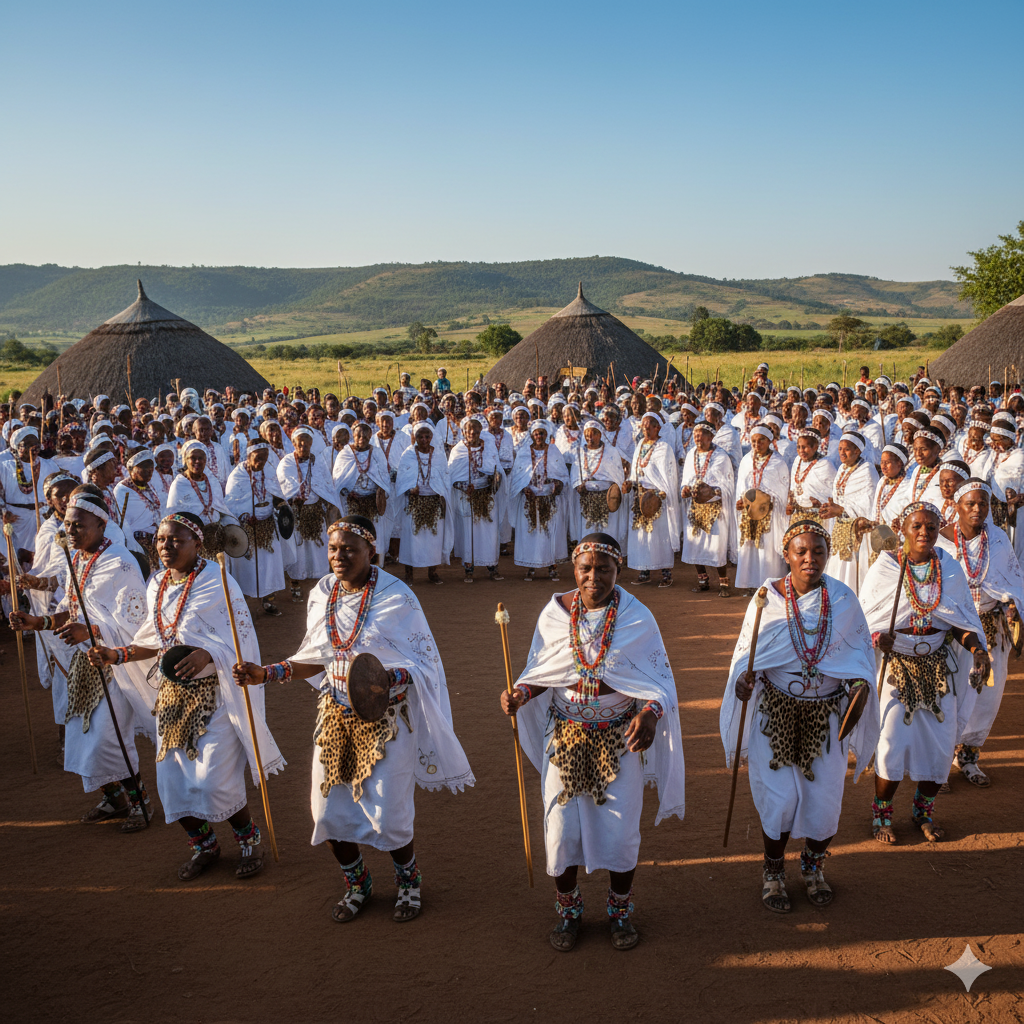
Vibrant gatherings feature singing, dancing, and ritual cleansing. Worship is embodied — hearts, voices, and steps moving together.
- Music as prayer, dance as devotion.
- Orderly participation led by elders.
Attire
Distinctive clothing reflects Zulu heritage and modesty: white garments, beadwork, and traditional accessories during festivals.
- Symbol: purity, unity, identity.
- Beauty with reverence.
Music & Instruments
Traditional rhythms and choral harmonies create a soundscape of faith — a communal heartbeat.
- Function: teaching, memory, solidarity.
- Effect: joy that gathers generations.
Festivals & Holy Sites
Pilgrimages to Shembe holy sites are central to spiritual renewal. Festivals weave prayer, instruction, and fellowship with cultural celebration — a time to re-root identity and receive blessing.
- Teaching and testimonies.
- Shared meals and service.
- Healing prayers and vows.
Education, Health & Social Welfare
Modern Shembe institutions support education, health, and social welfare. Members contribute to local development, preserve Zulu heritage, and advocate for dignity and responsibility.
Everyday impact: youth mentorship, care for elders, conflict mediation, and community clean-ups — faith with working hands.
Learn with Respect
- Listen first: center Shembe voices and lived experience.
- Context: history, language, and local customs matter.
- Bridge-building: notice harmony between Scripture and heritage.
Frequently Asked Questions
? Is Shembe Christian or traditional?
? Why the emphasis on Sabbath and modesty?
? What’s with the white clothing?
? How should visitors behave at services?
? Why are there multiple Shembe groups?
Faith Rooted Like a Tree
Shembe is a vibrant tapestry — gospel, culture, music, and community woven together. Its rhythms call people to holiness, harmony, and helpfulness.
Next tiny step: learn a song, read a teaching, or serve a neighbor — let devotion grow fruit. 🌧️🍃