
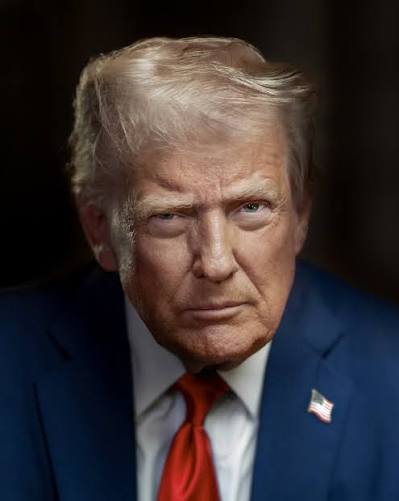
The Politics of Genocide Talk: Investigating Trump’s Claims About South Africa
A neutral, evidence-based look at “white genocide” allegations and why they persist despite rebuttals
⚖️ Fact‑checked claims
🌍 South Africa & US politics
🔍 Rhetoric, strategy & evidence
In recent years, former and current U.S. President Donald Trump has repeatedly claimed that white South Africans
– particularly Afrikaner farmers – are facing a “genocide”. He has used the term in social media posts, public
remarks and in defence of a refugee programme that gives preferential treatment to white South Africans. These
allegations have been examined and rejected by South African authorities, independent fact‑checkers and even
the U.S. government’s own diplomats, who say there is no evidence of an organised campaign to exterminate
white people in South Africa.
This article does not try to read anyone’s mind or claim access to a “secret truth” about Trump’s intentions.
Instead, it follows the available evidence: what Trump has said, how experts and officials have responded, how
the “white genocide” narrative fits into wider political rhetoric, and what strategic purposes it may serve for
different audiences. The aim is to provide a clear, factual picture so readers can understand why these claims
keep resurfacing even after being publicly rebutted.
📢 1. Trump’s “Genocide” Allegations in Context
Trump’s focus on South Africa dates back at least to 2018, when he tweeted that he had asked his Secretary of
State to study “land and farm seizures and expropriations and the large scale killing of farmers” in South
Africa. The tweet echoed a segment on U.S. television that portrayed land reform and farm attacks as part of a
racially driven campaign against white farmers. South Africa’s government rejected the tweet as misinformed, and
subsequent investigations by U.S. diplomats and independent fact‑checkers found no evidence of a state‑backed
programme to kill white farmers or a higher murder risk for whites than for other groups.
The narrative resurfaced in intensified form during Trump’s second term. In 2025 he launched a refugee
initiative that prioritised white South Africans, with the administration citing alleged “genocide” and
systematic persecution as justification. At the same time, Trump threatened to bar South Africa from the 2026
G20 summit in Miami, accusing its government of allowing or even encouraging violence against Afrikaners. South
African President Cyril Ramaphosa publicly rejected the claims as “blatant misinformation”, and crime data
showed that farm murders – while serious and traumatic – accounted for a very small share of South Africa’s
overall homicide rate, which affects all communities.
By 2025, major news outlets and researchers were routinely describing the “white genocide” narrative as
baseless, and linking it to a broader conspiracy theory that has circulated in far‑right and white‑nationalist
spaces for years. In this theory, demographic change, crime and land reform are portrayed not as complex social
processes but as evidence of a coordinated plan to eliminate white populations. Trump’s language about
“genocide” in South Africa aligns closely with that discourse, even when official reports and court decisions
point in a different direction.
🧾 2. Evidence, Data and Diplomatic Reality
When genocide is alleged, the bar of evidence is high. Under international law, genocide refers to acts
committed with intent to destroy, in whole or in part, a national, ethnic, racial or religious group. That
means both widespread violence and proof of a specific intention to eliminate a group as such. In the South
African case, researchers and crime statistics do not support the idea that white people, or white farmers in
particular, are being targeted in a way that fits this definition.
South Africa’s own police data and independent analysts show that farm attacks affect a range of victims and
represent a small share of the country’s high overall murder rate. Homicide in South Africa is a serious
problem, but it is primarily linked to armed robbery, interpersonal violence and organised crime, rather than a
centrally directed campaign against a particular racial group. In addition, the U.S. Embassy in Pretoria
conducted its own assessment and concluded that there was no evidence that farm murders specifically targeted
whites for political reasons or that a government‑driven extermination campaign was underway.
Fact‑checking organisations have reached similar conclusions. Detailed examinations published in 2018 and again
in 2025 found that Trump’s statements overstated the scale of farm attacks, misrepresented trends in violence
and ignored context such as land reform debates and long‑standing crime patterns. Genocide‑monitoring groups
have also rejected the idea that white South Africans are facing genocide, while still recognising that some
communities feel vulnerable or marginalised and that individual attacks can be horrific.
In diplomatic terms, South Africa and the United States remain partners in areas like trade and security. Public
disputes over rhetoric have not translated into evidence that Pretoria is pursuing an extermination policy
against any group. This gap between allegations and documented reality is what makes Trump’s repeated use of
the word “genocide” so controversial among diplomats, scholars and human rights experts.
🎯 3. Possible Motives: Political Strategy, Not Legal Proof
Because motives are internal, analysts can only infer them from patterns of behaviour, political incentives and
the audiences a message appears to target. In Trump’s case, several possible strategic motives are widely
discussed by journalists, academics and human‑rights observers. None of these motives excludes the others; they
can overlap and interact.
1. Appealing to a specific political base. The “white genocide” narrative has circulated for years in
segments of the far right, particularly in online communities and among some white‑nationalist groups. By
highlighting South African farm attacks as evidence of genocide, Trump speaks directly to people who already see
themselves as victims of demographic change and multiculturalism. This can strengthen loyalty among supporters
who view him as a defender of threatened white communities worldwide.
2. Justifying selective refugee and immigration policies. When the U.S. sharply reduced overall refugee
admissions but created a special channel for white South Africans, genocide language provided a moral frame: it
suggested that a small number of “true” victims deserved rescue even as others were turned away. Analysts have
argued that this framing portrays white applicants as uniquely endangered, whereas refugees from other regions –
including conflict zones in Africa, the Middle East or Central America – were often described by Trump in
negative or criminalising terms.
3. Creating leverage in foreign policy disputes. By accusing South Africa of genocide and linking that
language to high‑profile events like the G20 summit, Trump increases the political cost of disagreement for
Pretoria. The threat to exclude South Africa from the Miami meeting, combined with claims of persecution against
Afrikaners, put pressure on the South African government in a way that resonated with parts of Trump’s domestic
base and media ecosystem, even if it clashed with diplomatic assessments and data.
4. Reframing global debates about genocide. In the 2020s, the word “genocide” has also been used by
activists, legal experts and UN bodies to describe or investigate events elsewhere – most prominently Israel’s
conduct in Gaza, supported militarily and diplomatically by Washington. Some commentators suggest that focusing
on alleged “white genocide” in South Africa may help shift attention away from situations in which U.S. allies
face scrutiny, or recast the United States as a rescuer rather than a complicit actor. Whatever one thinks of
that interpretation, it illustrates how genocide language can be used not only to describe atrocities but also
to reposition states in the moral landscape of international politics.
🔥 4. Why the Word “Genocide” Hits So Hard
Scholars of mass violence have long noted that the language leaders use can escalate tensions or cool them
down. Calling a situation “genocide” instantly raises the stakes: it invokes the Holocaust, Rwanda and Srebrenica,
and suggests that ordinary policy disagreement is no longer possible – only emergency action. That is why
international courts and UN bodies are cautious about the term, often taking years to reach formal conclusions
based on large volumes of evidence.
When political leaders use the word loosely, there can be unintended consequences. People who already feel
threatened may read it as confirmation that they are under attack. Militant groups can cite genocide rhetoric to
justify retaliatory violence. Communities that are genuinely suffering serious but non‑genocidal abuse may see
their experiences dismissed when legal bodies later say the definition has not been met, feeding cynicism about
international law. In that sense, overstating or misusing genocide claims can make it harder, not easier, to
mobilise the world when actual genocide risks emerge.
In South Africa, public discussion about farm attacks, land reform and crime is already highly charged. When a
foreign leader with a global microphone labels those challenges “genocide”, it amplifies the most polarising
interpretations and sidelines quieter, evidence‑based work to improve safety and address inequality. That is why
many South African commentators – including some who are sharply critical of their own government – have pushed
back against Trump’s language while still insisting that rural violence and economic injustice must be taken
seriously.
🌇 5. A Pattern, Not a Verdict on Character
Looking across the record, a pattern emerges. Trump has used the word “genocide” in relation to white South
Africans even when official data, diplomatic assessments and fact‑checks indicate that the legal threshold for
genocide is not met. He has connected those claims to policy moves, such as selective refugee programmes and
threats in international forums, in ways that align with the interests of particular domestic constituencies.
None of this proves what Trump personally believes; political leaders often blend conviction, instinct and
strategic calculation. But it does show that genocide language can function as a powerful tool in the arsenal of
modern populist politics. It can dramatise foreign issues, frame allies and adversaries, and signal solidarity
with certain groups while distancing others. For citizens and observers trying to make sense of these debates,
the key is to separate three layers: the facts on the ground, the legal definition of genocide, and the
rhetorical use of the term in domestic and international politics.
In the South African case, the available evidence supports a sober conclusion: violent crime and rural insecurity
are real and serious challenges, but they do not amount to a state‑directed programme to annihilate white
communities. Trump’s repeated genocide allegations, therefore, tell us less about conditions in South Africa
than about how contemporary politics turns words associated with humanity’s worst crimes into instruments of
mobilisation, identity and power.
❓ FAQs: Trump, South Africa and “Genocide” Claims
1. What exactly has Trump said about “genocide” in South Africa?
Trump has claimed that white South Africans, especially farmers, are facing a genocide or systematic
persecution, linking this narrative to land reform and rural crime. He has used these claims to justify a
special refugee pathway for white South Africans and to criticise the South African government in forums
like the G20. These statements build on earlier tweets and TV appearances dating back to 2018.
2. Do crime statistics support the idea of a genocide against white South Africans?
Available data do not support that conclusion. Farm murders are a serious issue, but they make up a small
fraction of South Africa’s already high overall murder rate. Violence affects all communities, and police
data, independent researchers and foreign diplomats have not found evidence that white people are being
targeted in a way that matches the legal definition of genocide.
3. How have South African officials responded to Trump’s allegations?
South African presidents and ministers have consistently rejected the genocide narrative as false. They
acknowledge the country’s serious problems with crime and inequality, but argue that these are complex,
multi‑layered issues that do not amount to an extermination campaign. Officials have also expressed concern
that external rhetoric about “white genocide” can inflame tensions and distort international perceptions.
4. What have fact‑checkers and diplomats said?
Fact‑checking organisations have repeatedly concluded that Trump’s claims are exaggerated or misleading,
noting that they rely on selective statistics and omit key context. A cable from the U.S. Embassy in South
Africa similarly reported no evidence of a politically motivated campaign to kill white farmers, describing
the genocide narrative as a simplification used by some groups for ideological purposes.
5. Why do some analysts link Trump’s rhetoric to the “white genocide” conspiracy theory?
The conspiracy theory claims there is a coordinated plan to eliminate white populations through violence,
migration or social change. When political leaders highlight South Africa as proof that whites are under
attack, and do so despite contrary evidence, it echoes themes common in that narrative. Researchers argue
that this kind of framing can normalise extreme ideas and energise far‑right groups, even if mainstream
politicians do not explicitly endorse those groups.
6. Does challenging the genocide narrative mean ignoring real problems in South Africa?
No. Many critics of the genocide rhetoric emphasise that South Africa still faces severe inequality, high
levels of crime and deep anxieties about land and economic justice. The argument is not that everything is
fine, but that labelling these challenges “genocide” is inaccurate and unhelpful. It can overshadow practical
debates about how to improve security, reform land ownership and address historical injustice.
7. How does this relate to broader global debates about genocide?
In the same period that Trump has spoken of “genocide” against white South Africans, international courts,
UN experts and human‑rights organisations have been examining possible genocide in places like Gaza. This
shows how the term has become a central battleground in global politics: different actors deploy it to
highlight some atrocities, deflect attention from others or redefine who is seen as a victim and who as a
perpetrator.
8. Why does the choice of words by leaders matter so much?
Words from powerful figures can shape how millions of people see the world. When leaders describe a situation
as genocide, they can inspire solidarity and urgent action, but they can also deepen fear, polarisation and
fatalism if the label is not supported by evidence. Careful use of the term helps preserve its meaning for
situations where it truly applies and where international law can play a constructive role.
9. Is this article trying to tell readers how to feel about Trump?
No. The goal here is to present a clear, evidence‑based overview of what has been said, how it has been
evaluated and what wider patterns scholars and journalists have noticed. Readers can draw their own
conclusions about Trump’s character or policies; this piece focuses on information that can be checked and
analysed.
10. What should readers keep in mind when they hear genocide claims in politics?
It can be useful to ask three questions: What does the legal definition of genocide require? What does the
best available evidence say about the situation on the ground? And how might different actors benefit from
using the term in a particular way? Keeping those questions in mind helps separate real warning signs from
rhetorical exaggeration and allows people to engage with debates on mass violence in a more informed and
responsible way.